Your monthly DCA: buy bitcoin itself, or a spot bitcoin ETF?
Both routes can put your money to work every month without you lifting a finger, but you can't compare them on a single price tag. The fees land at different stages, and the trading hours, what you end up owning and what happens when a plan breaks all differ too. On Binance, each of these is spelled out in the Help Center; on the ETF side, fees and holdings are on the product page, and the payment rules sit with your broker.
If you put a fixed sum into bitcoin every month, there are at least two ready-made ways to automate it: set up Convert Recurring on Binance and let it swap your money into coins on a schedule, or buy shares of a spot bitcoin ETF through a brokerage account. Either way, you stop having to think about it each month. Whether both routes are open to you depends on where you live. Binance.com doesn't accept users from every country: US residents, for example, can't use it, and Binance.US is a separate platform with its own products. Check Binance's Terms of Use for your country first; on the ETF side, check that your broker lets you buy US-listed ETFs.
Convert Recurring buys the coin itself, can run anywhere from hourly to monthly, charges no additional fee and fills at the Convert quote. A spot ETF (I'll use iShares' IBIT as the example) buys you fund shares: the product page lists a 0.25% Sponsor Fee, trades follow US market days, and the shares sit in your brokerage account. What really decides it is where your money already is, and whether you want to hold the coins yourself.
Rules and fees change. Everything quoted here comes from the pages as I read them in September 2026.
How each route runs on autopilot
On Binance, the automation is part of the product. Binance's Help Center article What Is Auto-Invest and How to Use It says the old Auto-Invest service "is scheduled to discontinue after 31 March 2025, with the exception of the Index-Linked Plan, which will remain operational", and that Auto-Invest has transitioned to Convert Recurring. You pick the coin, the amount per purchase and the frequency, and from then on the system runs the plan by itself.
There are five frequencies: hourly, daily, weekly, every two weeks and monthly. The advanced settings hold a few things worth knowing about: Maximum Period caps how many purchases the plan makes in total, Limit Price sets a price range the purchases must execute within, and there is a Recurring Plan Simulator as well.
With an ETF, the automation comes from your broker. IBIT is listed on Nasdaq, and its shares trade on the exchange just like a stock. The fund manager runs the fund, not your orders. Whether you can set up recurring buys, whether you buy by dollar amount or by number of shares, and which menu any of that lives in are all features on the broker's side.
A platform that executes for you and a broker that places orders for you are two different parties in charge, and that difference comes back when we get to trading hours and failed purchases.
Where the fees sit on each side
Both sides put their fees in writing, but at completely different points in the process, so you can't just subtract one number from the other.
Start with the ETF. The IBIT page lists a Sponsor Fee of 0.25%, with the note "Fees as stated in the prospectus". The risk disclosure on the same page explains how it gets paid: "The amount of bitcoin represented by shares of the Trust will decrease over the life of the Trust due to sales of bitcoin necessary to pay the sponsor's fee and trust expenses." Nobody sends you a separate bill, but the longer you hold, the less bitcoin each share stands for.
Because the ETF trades on an exchange, there is also a bid/ask spread between you and the fill. The same page shows a 30 Day Median Bid/Ask Spread, which read 0.02% in mid-September 2026. That figure moves with the market.
Now Convert Recurring. Binance explains the change in What Is Auto-Invest and How to Use It: "Previously, Auto-Invest included an additional fee on top of the quoted price provided by Binance. The new Convert Recurring feature will not have any additional fees; trades will be executed based on the quoted price from Binance Convert." Yet its Frequently Asked Questions on Binance Convert "Recurring" also carries this line: "Recurring prices may be different from market prices on Binance Spot."
Read those two together. "No additional fees" means there is no second charge on top of the quote. Whether the quote itself differs from the spot price, and by how much, neither help article puts a number on. What you can do is reconcile after the fact: every purchase price is recorded under [Orders] - [Convert History] - [Recurring History], and you can compare it with the spot price at the same moment.
| What to look at | Spot bitcoin ETF (IBIT as the example) | Binance Convert Recurring |
|---|---|---|
| Fee stated on the page | Sponsor Fee 0.25%, as stated in the prospectus | No additional fees |
| Where the fill price comes from | Matched on the exchange, with a bid/ask spread | The Convert quote, which may differ from the spot market price |
| What those pages don't tell you | Broker-side charges, how recurring buys are set up, whether you can trade outside regular hours (varies by broker) | How far the quote sits from the spot price |
| Where to check for yourself | Product page, prospectus, your broker's fee schedule and recurring-investment help pages | [Orders] - [Convert History] - [Recurring History] |
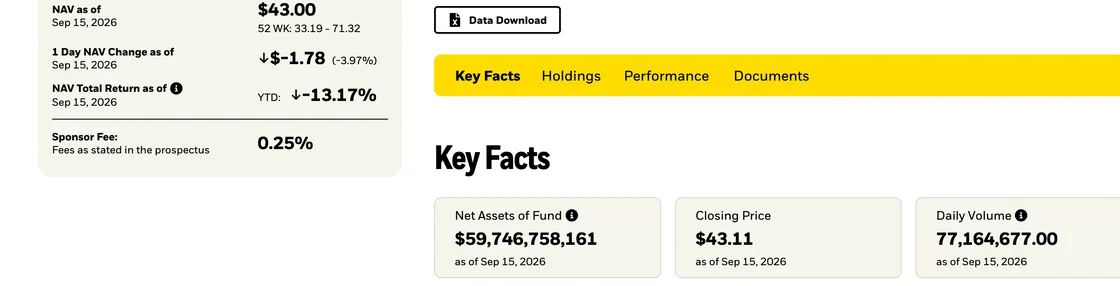
These two costs feel very different to me. The 0.25% is out in the open: it stings a little once you work it out, but you know exactly where it is. Whether the Convert quote drifts from spot, and in which direction, you never find out unless you go through your recurring history. For a plan meant to run for years, I'd check both of these myself every so often.
When does the trade actually happen?
Convert Recurring executes on whatever schedule you set. According to the FAQ, an hourly plan makes its first trade 1 hour after the plan is created; daily, weekly, bi-weekly and monthly plans execute on the scheduled date and time.
An ETF is different: your shares have to be matched with someone else during trading hours. Regular US stock market hours on NYSE and Nasdaq run from 9:30 AM to 4:00 PM Eastern Time, Monday to Friday. IBIT is listed on Nasdaq, so that is its regular session.
For someone buying monthly, that means two practical things. First, convert the window into your own time zone, and allow for the one-hour shift when US daylight saving time starts and ends. Second, if your DCA day lands on a weekend or a US market holiday, the regular-hours window is closed.
If you buy once a month and plan to hold for many years, whether one purchase fills a few hours early or a day late is not the thing to lose sleep over. The thing to pin down is this: the day you think it buys, versus the day it actually buys, and at what price.
What you actually end up owning
With an ETF you own shares, and the bitcoin sits with the fund. In the holdings on the IBIT product page, BITCOIN carries a 100.00% weight, about 780,000 coins in mid-September 2026, alongside a tiny amount of US dollar cash; the page notes that the quantity shown is the total number of bitcoins the fund holds. What appears in your account is a number of shares, held at your broker.
The same page lists Distribution Frequency as None. With no regular distributions listed, don't expect a payout on a schedule while you hold it; your gains and losses show up in the share price. The page sums up what the product is for: it "offers exposure to bitcoin through an exchange-traded product, simplifying the operational and custody complexities of holding bitcoin directly."
With Convert Recurring you own the coin itself. The bitcoin you buy lands in your Binance account, where you can leave it or withdraw it to your own wallet. Once it's withdrawn, keeping it safe is entirely your job: whoever holds the private keys controls the coins, and if the keys are lost, it's very hard for anyone to help you get them back.
Some people want a number in an account without ever touching a private key; others want the coins in their own hands, full stop. Work out which one you are before you start comparing fees.
The letters ETF make it easy to assume this is regulated like any ordinary fund. The IBIT product page says plainly that the Trust "is not an investment company registered under the Investment Company Act of 1940, and therefore is not subject to the same regulatory requirements as mutual funds or ETFs registered under the Investment Company Act of 1940", and also that "The Trust is not a commodity pool for purposes of the Commodity Exchange Act." Read that passage in full before you buy, and factor in bitcoin's own price swings too — whichever route you take, what you are buying in the end is bitcoin's ups and downs.
Short of money on the day: what happens to the plan
What really hurts a DCA plan isn't one purchase at a bad price. It's the plan quietly stopping without you noticing. Binance's Frequently Asked Questions on Binance Convert "Recurring" covers several of these situations, summarised in the table below.
| Situation | What Binance says happens |
|---|---|
| Not enough balance at execution | That purchase fails; the system tries again on the next recurring cycle |
| Purchases keep failing | After 6 months of continuous failures, the plan is cancelled |
| Number of plans | Up to 20, counting both ongoing and paused plans |
| Time of execution | On the scheduled date and time, at the same minute as when the plan was created |
| "Full month" execution day | The last day of the month, whether it falls on the 29th, 30th or 31st |
| Whether a plan is accepted | Submitting a plan does not guarantee that Binance will accept it, or any scheduled conversion |
Two rows deserve a closer look. The first is the "6 months" rule: the moment a single purchase fails, you have already missed that buy, and cancellation only comes much later, so don't wait for the plan to be cancelled before you notice. The second is the minute: say you create a weekly plan at 17 minutes past the hour; every execution after that also lands at 17 minutes past. If you want tidy execution times, give it a thought when you create the plan.
On the ETF side, the payment logic lives with your broker. Look in your broker's recurring-investment help pages for four answers: what happens when your DCA day falls on a weekend, what happens to a purchase when the money isn't there, whether the plan stops after several misses in a row, and whether you'll be told when it does.
Four questions to pick your route
1. Where is your money right now? If it's already in a brokerage account that trades US stocks, buying ETF shares saves you a step; if it's already in a Binance account, Convert Recurring is right there. Moving money from one side to the other takes time in itself, and may cost fees as well.
2. Do you want to hold the coins yourself? If you plan to move your coins to your own wallet one day, buying the coin directly is the ready-made route. If you'd rather never touch a private key and just see a number in an account, that is exactly the need ETF shares are built for, and the product page describes itself in those terms.
3. Can you live with trades that follow US market days? If you want a fine-grained frequency like hourly, or don't want execution tied to the stock market's open and close, Convert Recurring is the better fit. If you buy once a month and don't much care about the exact moment of the fill, this question carries little weight for you.
4. Are you willing to reconcile? Convert Recurring charges nothing beyond the quote, but how far that quote sits from spot is something you check yourself in your recurring history. The ETF's fee is out in the open; the spread and your broker's charges are the parts you fill in from the product page and your broker's fee schedule.
Once you've answered all four, the route is mostly decided. If the amount or frequency turns out not to suit you, you can edit the plan straight from the Recurring homepage; once you settle on how you hold, switching is far more hassle, so it's worth thinking a little longer before the first payment goes out.
Settle the form of the plan first
Coins or shares, and which account the money comes out of: decide those two first. The amount can be adjusted as you go, but if you keep switching the form, the DCA never gets the chance to run for long.
Binance is not available in every country, including the US. Disclosure: if you enter this site's Binance invite code BN1516 when you register, Manfu may receive a referral fee, and you pay nothing extra. Investing carries risk; the content is for education only and is not investment advice.
FAQ
Does a spot bitcoin ETF pay dividends?
Take IBIT: its product page lists Distribution Frequency as None, so there are no regular distributions. While you hold it, your gain or loss shows up in the share price. Don't treat it as a fund that pays out on a schedule.
Is Binance Convert Recurring really free of fees?
Binance's Help Center says Convert Recurring has no additional fees and trades are executed at the Binance Convert quote. The same set of FAQs also says recurring prices may be different from market prices on Binance Spot. Each purchase price is recorded under [Orders] - [Convert History] - [Recurring History], so you can check it yourself.
What happens if my balance is short on the day a purchase is due?
According to Binance's FAQ, that purchase fails and the system tries again on the next recurring cycle. If execution keeps failing for 6 months in a row, the plan is cancelled.
On a "full month" plan, which day does it execute each month?
The last day of the month, whether the month ends on the 29th, 30th or 31st. The execution minute is the same as the minute at which you created the plan.
If I buy a spot bitcoin ETF, do I own bitcoin myself?
You own fund shares; the bitcoin is held by the fund. In mid-September 2026 the IBIT holdings listed about 780,000 bitcoin, while your shares sit in your brokerage account. If you want the coins in your own wallet, buying the coin directly is the ready-made route.